
Composite tooling
Four Routes to a Composite-Tooling Master Model
A master model is the controlled geometry reference from which a working mould is made. It may be convex in a conventional lay-up, but its real job is to hold validated geometry, finish and stability so the copied tool starts from a reliable surface.
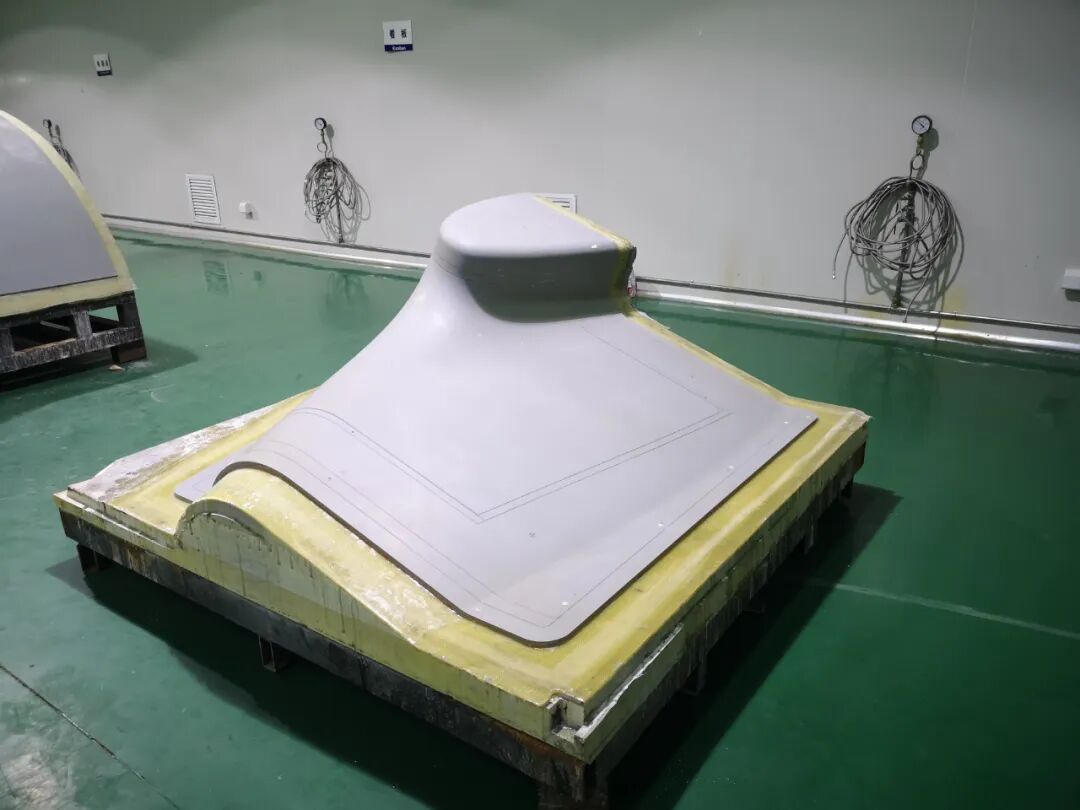
A master model is the controlled geometry reference used to make a working mould. In a conventional lay-up it is often convex, but the term describes the validated reference rather than one fixed polarity. Its geometry, release finish and stability set the starting point for each copied tool. A working mould carries the laminate or part through its cure cycle, so it needs its own heat, vacuum and load capability.

Four practical build routes
1. Polyurethane foam, glass fibre, tooling paste and gel coat
This route builds volume quickly and puts precision in a machinable outer layer. A PUfoam blank is cut oversize and covered with a glass-fibre/epoxy shell. Vacuum compaction on later plies reduces voids. EPMOLD paste is applied in passes over a wet epoxy primer; hand or machine deposition can build the required working thickness. After the specified cure and post-cure, the layer is CNC machined. Finish with a compatible mould gel coat, then cure, sand and polish it to the release requirement. Select the paste, laminate and gel-coat grades from their current technical data rather than treating one recipe as universal.
Foam density, paste hardness and thermal limits vary by grade and post-cure. The route remains attractive for medium or intricate masters because the lightweight core is easy to cut and handle, while the shell and machinable layer provide stiffness and finish. It is normally a low- or intermediate-temperature master; a 60 °C LTP prepreg pre-cure is an example of the intended use. Use a different system when the master itself must see a high-temperature production cure.
2. Integral cast tooling board
An integral cast build starts with a disposable or split mould box. PUCAST or EPCAST resin is poured, allowed an initial cure and then post-cured on the supplier schedule. The solid blank is demoulded and rough- and finish-machined, including datums and mounting features. Low viscosity, low shrinkage and controlled exotherm matter in thick sections. Density, hardness and Tg are formulation- and cure-dependent, so the selected grade must be checked against the planned temperature and machining loads.
Fillers, aluminium particles, a glass- or carbon-fibre face ply, honeycomb or metal inserts can reduce resin volume, manage heat and stiffen a blank. Release treatment and a demouldable box are essential. Because the body has no board seams, sealing is simpler and the machining surface is continuous. The trade-off is material volume and process control: thick pours need staged curing, support against sag and checks for voids, residual stress and shrinkage. This route suits a medium-size, high-precision master where continuity is worth the extra box and resin work.

3. Contoured steel frame, glass-fibre skin, tooling paste and gel coat
For a very large or slender master, the frame carries the load and the surface layers carry accuracy. A welded steel space frame follows the curvature; stress relief and machined locating faces limit drift. A glass/epoxy skin is leak-tested, covered with EPMOLD paste and CNC trimmed, then sealed with gel coat. Steel provides stiffness, the laminate an air-tight envelope and paste the machinable shape.
Establish a few datum panels first, verify their coordinates and work outward to control accumulated error. A controlled 60–80 °C thermal cycle before final refinement can reveal movement from the different expansion of steel and paste. This architecture avoids a massive solid block for large aircraft-style surfaces, but has more interfaces and remains temperature-sensitive if paste dominates the face.

4. Stacked tooling-board machining
Board stacking is direct when a stable, machinable blank matters more than a lightweight shell. EPBOARD epoxy or PUBOARD polyurethane board is cut into layers or blocks, pre-machined for mating, bonded with temperature-compatible structural adhesive and fully cured. Locating pins or a fixture prevent movement; a complete adhesive film with squeeze-out helps stop joints becoming leak paths. The bonded blank is then five-axis machined from a common datum.
Board machining behaviour and thermal limits depend on the selected PUBOARD or EPBOARD grade; verify density, heat-deflection rating and CTE in the current technical data. Factory-cured board is easy to measure, repair and modify. Seams remain the weakness: joints must be sealed and inspected, and a large stack consumes board and machining time. The route is often attractive when the master is small, the CNC path is straightforward and design changes are likely.
Decision criteria that survive the first article
- Match the master's thermal rating to the working mould and copying cycle.
- Decide whether the surface must be inherently continuous and easy to seal.
- Reserve a stiff datum strategy for long, thin or heavily supported geometry.
- Allow for inspection, repair and likely design changes before selecting the blank.
| Route | Where the geometry comes from | Best fit | Watch first |
|---|---|---|---|
| Foam + glass + paste + gel coat | Machined paste over a sealed shell | Medium, complex surfaces; light handling | Temperature limit, voids and paste thickness |
| Integral cast board | One post-cured, continuous blank | Medium/high-precision, seam-free surfaces | Exotherm, shrinkage, voids and mould-box cost |
| Steel frame + glass + paste | Datum-controlled frame and machined paste | Very large or slender masters | Frame stress, CTE mismatch and interface sealing |
| Stacked board | Bonded blank machined from common datums | Small/medium masters; frequent changes | Bond lines, adhesive cure and board utilization |
Make the master serve the working mould
Choose from working-mould temperature, number of copies, surface finish, vacuum duty, handling limits and CNC envelope. One low-temperature copy may favour foam/glass/paste. Integral casting helps when a continuous, sealable surface matters; a frame build suits long, thin parts; a bonded board blank suits rapid changes. Hold a common reference temperature for machining, inspection and copying, then verify geometry, release behaviour and vacuum integrity before making the production mould. The material name alone cannot compensate for poor datum control, incomplete cure or an unsealed interface.