01 / CUSTOMER PROBLEM
Keep the assembly accurate
The adhesive is part of the tool’s geometry. A stable bondline and controlled gap can prevent print-through, core movement, edge lift and rework during trimming, drilling or lay-up.
 TOOLING MATERIALS
Product family
AviBond aviation adhesives support structural bonding, honeycomb and core reinforcement, and composite repair operations.
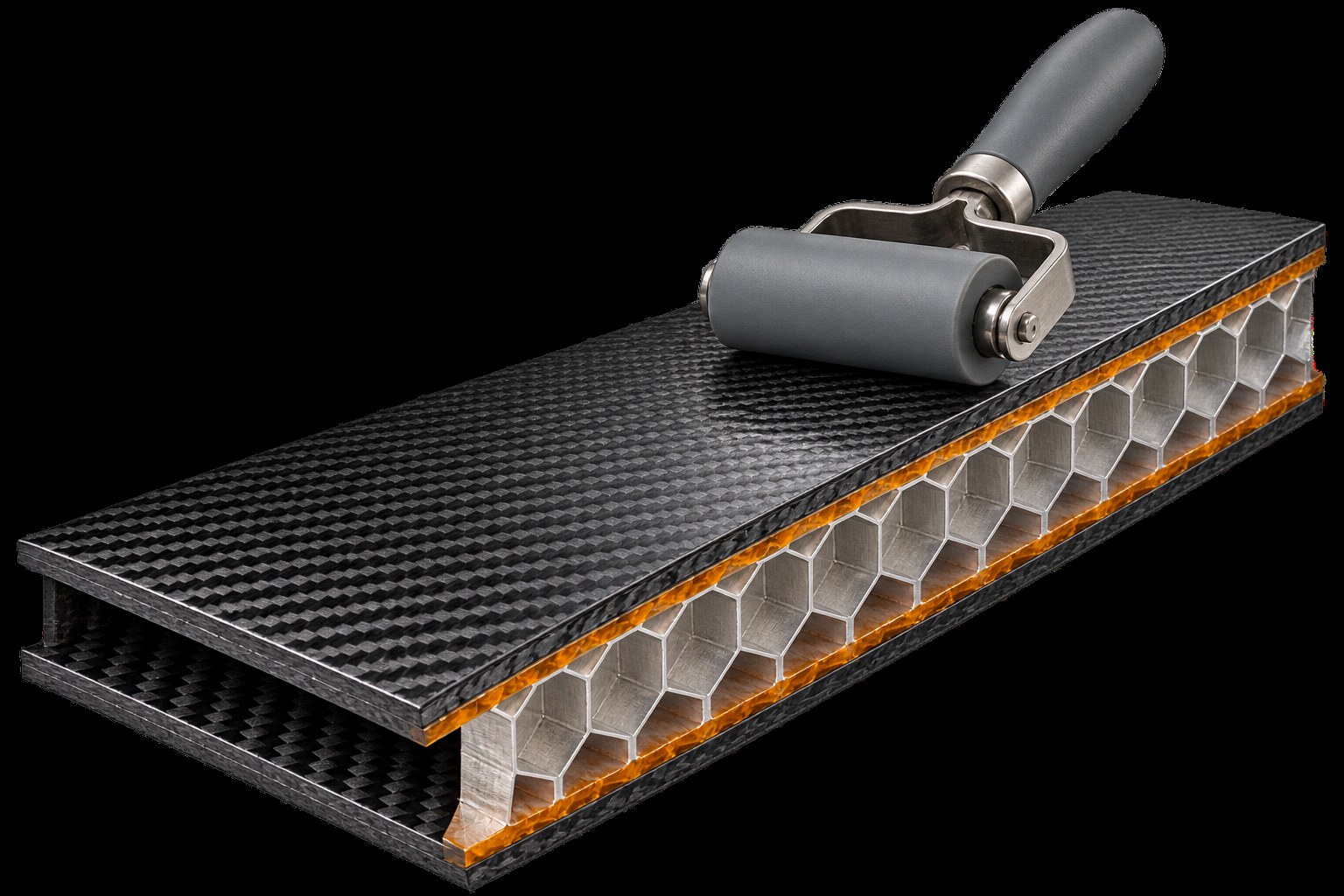
Engineering view / Aviation adhesives
Aviation tooling bonds must survive handling, vacuum loads, thermal cycles and repeated repair. Separate structural bonding, spray or tack positioning, core closeout and low-temperature repair, then match the adhesive to the substrate and site process.
01 / CUSTOMER PROBLEM
The adhesive is part of the tool’s geometry. A stable bondline and controlled gap can prevent print-through, core movement, edge lift and rework during trimming, drilling or lay-up.
02 / SELECTION LOGIC
Confirm substrate preparation, gap filling, open time, cure temperature, toughness, shear or peel demand, and whether the joint must be machined or painted. The AviBond catalogue is the starting point; the project brief determines the final route.
03 / PROCESS CHECKPOINTS
Control cleaning, abrasion or primer, mix ratio, application, clamp pressure, squeeze-out and cure. For honeycomb or core joints, verify wetting, closeout and local support before the skin is closed.
04 / RELEASE CHECK
For blade, panel or tooling repairs, define access, low-temperature cure, sanding, recoat and inspection before the damage occurs. A repair system that fits the site process can be more valuable than a headline strength number.
01 / PRODUCT FAMILY
Structural bonding systems for composite assemblies; select the grade by substrate, bond-line and cure schedule.
02 / PRODUCT FAMILY
Adhesives for honeycomb and core reinforcement, selected by density, working time, cure and load path.
03 / PRODUCT FAMILY
Repair, injection and surface-restoration adhesives for controlled composite maintenance work.