01 / CUSTOMER PROBLEM
Make design decisions visible
A physical clay model lets the team read reflections, gaps and transitions at the intended scale before a board, paste or composite tool is committed.
 TOOLING MATERIALS
Product family
Industrial Clay is the professional product term for automotive styling and soft model work. It is a separate product family from model boards and hard tooling materials.
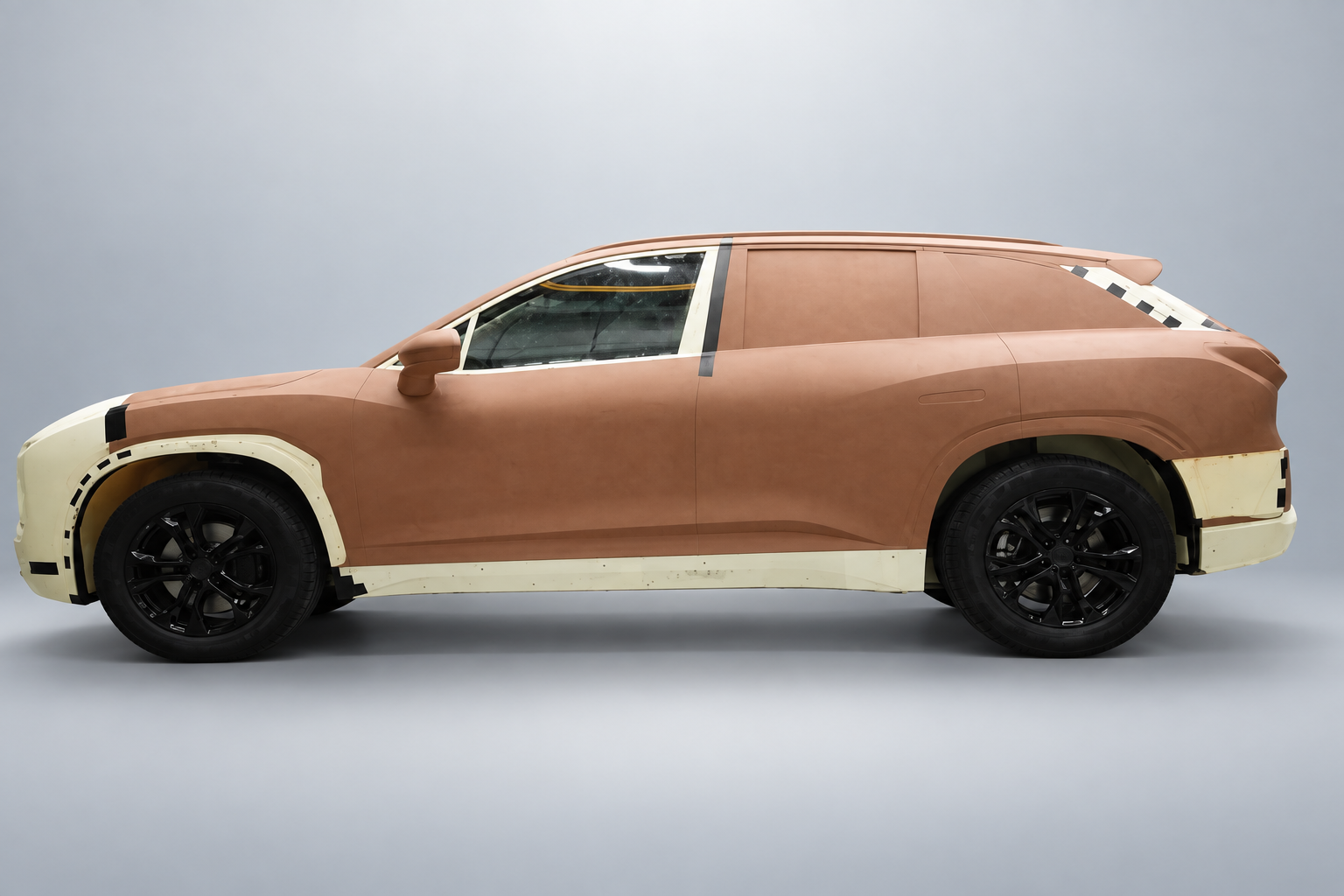
Engineering view / Industrial clay
Industrial clay gives designers a fast, tactile way to add, remove and refine a full-scale surface while checking highlight lines, shut lines, transitions and panel relationships. It is a styling medium, not a substitute for a structural mould.
01 / CUSTOMER PROBLEM
A physical clay model lets the team read reflections, gaps and transitions at the intended scale before a board, paste or composite tool is committed.
02 / SELECTION LOGIC
Use the grade and working practice suited to the required surface response, build-up, removal, scanning and review temperature. iClay 61M and 61H should be selected from their own TDS rather than by colour or feel alone.
03 / PROCESS CHECKPOINTS
Control the armature or substrate, working temperature, layer adhesion, smoothing, edge definition, scan or measurement hand-off and the way recovered clay is stored.
04 / RELEASE CHECK
After a design review, capture the approved geometry and record the changes before converting the model into a board, paste, mould or machining program.
Controlled TDS data
The grade names below are linked to the current English TDS documents.
01 / ICLAY 61M
Automotive styling clay
Reference route: soft model and styling work. Confirm working and service information in the TDS.
Open technical data ↗02 / ICLAY 61H
Automotive styling clay
Reference route: soft model and styling work. Confirm working and service information in the TDS.
Open technical data ↗01 / PRODUCT FAMILY
Use for surface development, styling review and soft model work; exact grade selection follows the TDS.