01 / CUSTOMER PROBLEM
Cut seams and rework
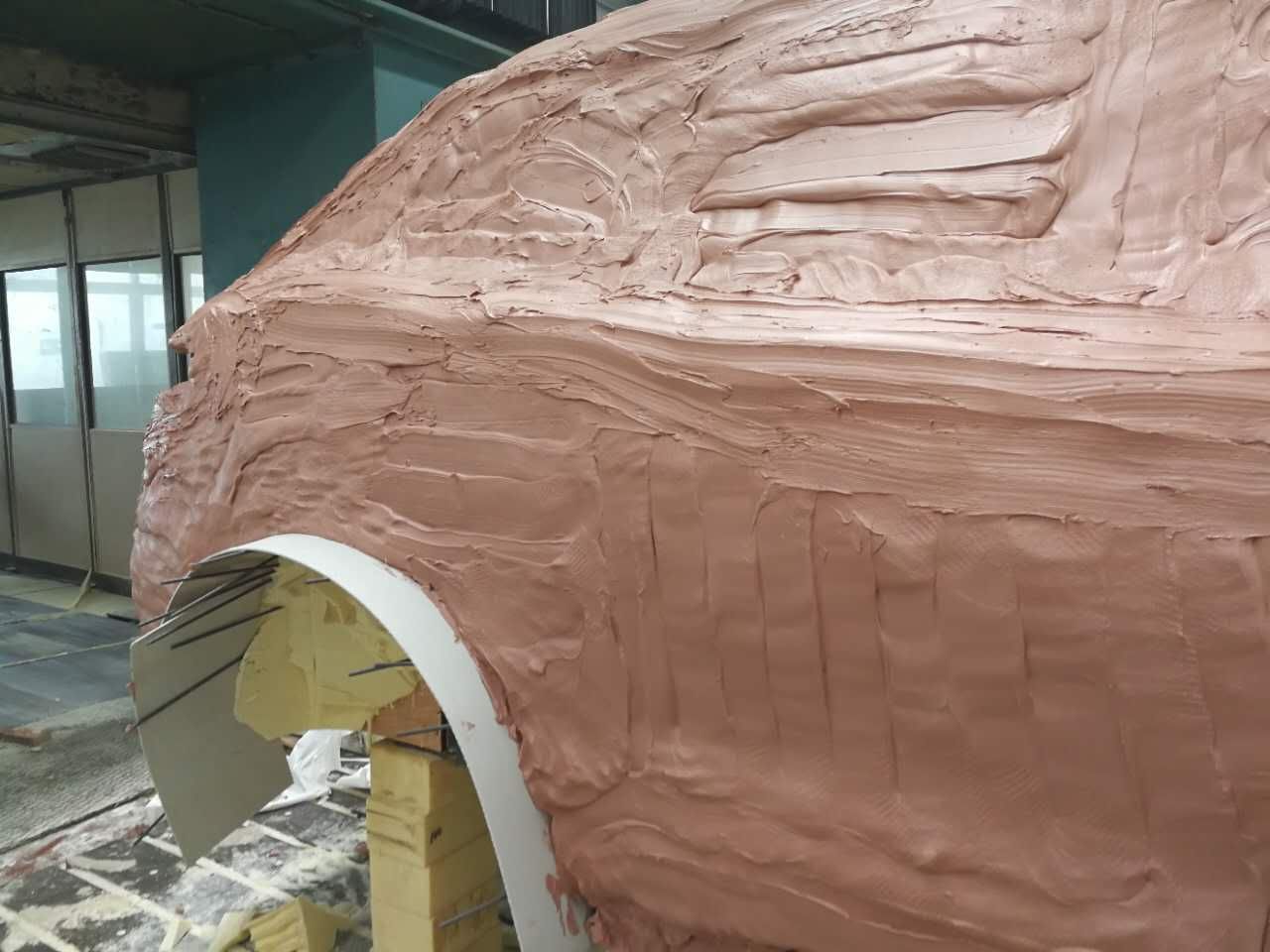
A paste route can create a near-net surface over a lightweight substrate, reducing block joints, filler work and the amount of material that must be removed by CNC.
 TOOLING MATERIALS
Product family
Tooling Paste is the correct family name. EPTEK offers hand-applied build-up pastes, machine-applied pastes and fast-repair pastes for large forms and working surfaces.
Engineering view / Tooling pastes
Paste systems can remove board joints and reduce finishing on large models and moulds. The useful question is not simply “hand or machine”; it is how layer thickness, sag resistance, open time, heat release, cure-to-machine time and surface finish fit the whole build.
01 / CUSTOMER PROBLEM
A paste route can create a near-net surface over a lightweight substrate, reducing block joints, filler work and the amount of material that must be removed by CNC.
02 / SELECTION LOGIC
Use hand-applied grades for local shaping, transitions and repairs. Use machine-applied systems when repeatable deposition and large-area consistency control the schedule. Fast-repair grades are for targeted corrections, not a substitute for the main build system.
03 / PROCESS CHECKPOINTS
Check substrate preparation, thickness, vertical-face behaviour, working time, heat release, cure-to-machine window and dust/chip behaviour. Follow the relevant work instruction for mixing, build-up, machining and sealing.
04 / RELEASE CHECK
The paste, core, adhesive, filler, surface coat and release system are a chain. A small representative trial is the quickest way to expose adhesion, shrinkage, porosity or paint-compatibility issues.
Product data
Hand-applied and machine-applied pastes are selected by build thickness, working time, machining window and service temperature.
01 / EP65
Machine-applied tooling paste
02 / EP72
Machine-applied tooling paste
03 / MP50
Hand-applied tooling paste
04 / MP65
Fast repair paste
01 / PRODUCT FAMILY
MP50 has a dedicated use guide covering build-up, cure, machining, surface preparation and repair. The hand-applied range also includes MP65, MP100, MP120 and MP150; the catalogue also includes LP70 for local reinforcement and repair work. Catalogue-only routes should be checked against the current TDS before a purchase specification is issued.
02 / PRODUCT FAMILY
EP65, EP65G, EP72, EP100 and P26 cover the machine-applied and related paste routes for repeatable large-area build-up and efficient surface preparation. Use the linked TDS for the specific grade and process.
03 / PRODUCT FAMILY
For local repair, edge rebuilding and short-window corrections; exact grades and limits follow the catalogue.
Application-specific selection
For thin-wall replicated trimming fixtures, the EPTEK technical review identifies EPMOLD LP70 in a glass-filled paste or reinforced-shell construction. Select the surface gelcoat, backing laminate, shell thickness and cure as a compatible system.