Application / Composite machining

Vacuum Trimming and Drilling Fixtures

A trimming fixture supports a composite part in a defined position while leaving clearance for the cutting tool. Reliable vacuum holding depends on the contact surface, seal layout, stiffness and stable datums—not simply on the material used for the body.

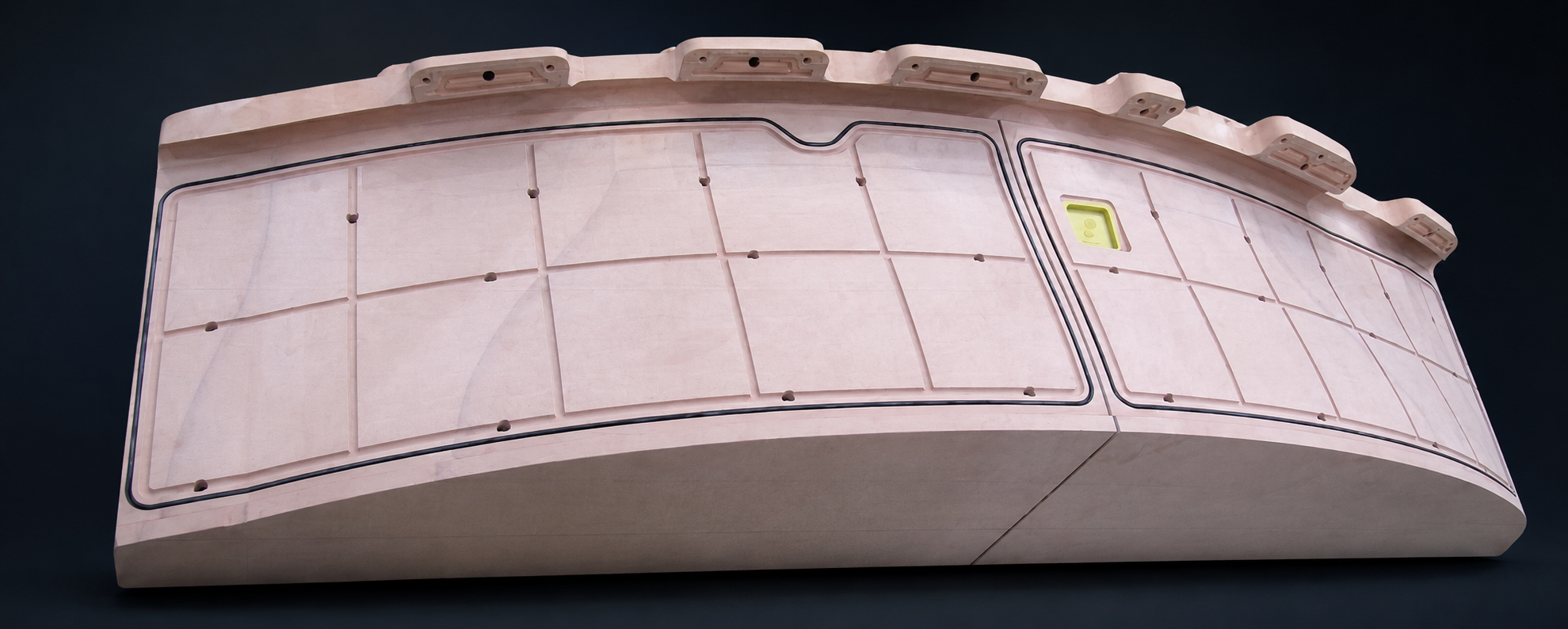
Curved trimming fixture with machined vacuum channels and sealing grid from EPTEK technical review
EPTEK / APPLICATIONSupport, vacuum channels and machining datums

Engineering requirements

Compare four construction methods

01 / REFERENCE METHOD

Cast aluminium + CNC machining

A metal reference route for stiffness, durability and established fixture practice. Compare casting and machining lead time, stock removal, handling mass and dimensional movement at the working temperature.

02 / BONDED BOARD

Board blank + CNC machining

Bond PUBOARD or EPBOARD into a blank, then machine the support surface, vacuum features and datum interfaces. Qualify bondline sealing, inserts and local support before accepting the completed fixture.

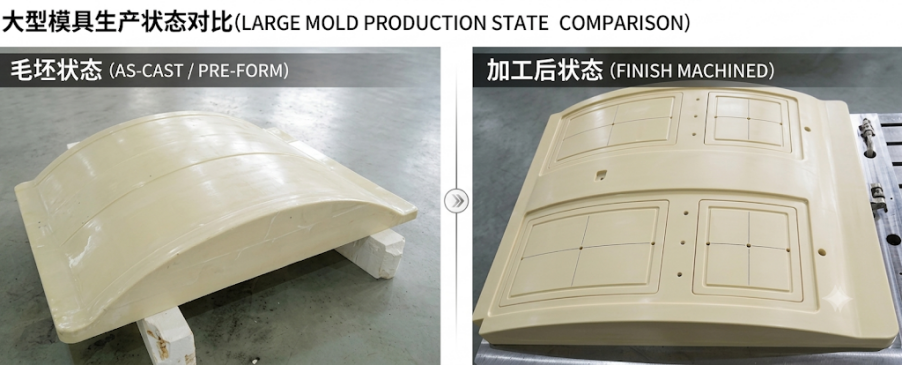
Precision-cast fixture blank compared with the machined fixture

03 / NEAR-NET CASTING

Precision-cast blank + CNC machining

Cast a filled PU or epoxy blank close to the required shape, then machine the final geometry. This can reduce excess stock; blank design, resin heat build-up, cure and machining allowance remain critical.

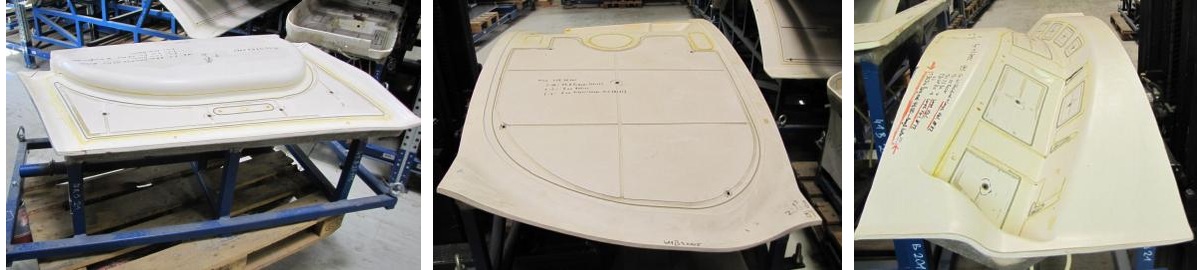
Thin-wall replicated trimming-tool constructions from EPTEK technical article

04 / REPLICATED SHELL

Gelcoat + glass-filled paste or reinforced laminate

Reproduce the contact surface from a controlled master, then build the shell and backing structure. The tool surface, part-thickness offset, shell stiffness, cure and frame attachment determine the final fit.

Engineering requirements

Match the route to the material system

RouteEPTEK product familyWhat to verify
Board machiningPUBOARD tooling boards / EPBOARDBondline airtightness, insert retention, machining and dimensional stability
Precision castingPUCAST / EPCASTCasting thickness, fillers, void control, cure and remaining machining stock
Replicated shellCompatible gelcoat + EPMOLD LP70 and selected EPLAM / EPMOLD backing systemsLayer compatibility, shell thickness, cure, reinforcement and frame attachment
Aluminium referenceMetal fixture design and machiningUse the same part, tolerance and acceptance criteria when comparing alternatives

Engineering requirements

Accept the fixture by its performance

CheckAcceptance focus
Fit and geometryInspect after cure and assembly. Include the part-thickness offset and springback where the tool is replicated.
Vacuum integrityCheck pull-down time and isolated pressure rise; separate leakage through the body, joints, seals and connections.
Location and supportVerify repeatable datums, seal compression, local stiffness and access for the cutting tool.
Temperature and machiningAssess expansion with the actual tool size and temperature change; confirm the first machined part against the drawing.
Whole-life costCompare usable blank volume, machining, joining, sealing, support structure, rework and expected service life.