Product family

Epoxy Resins

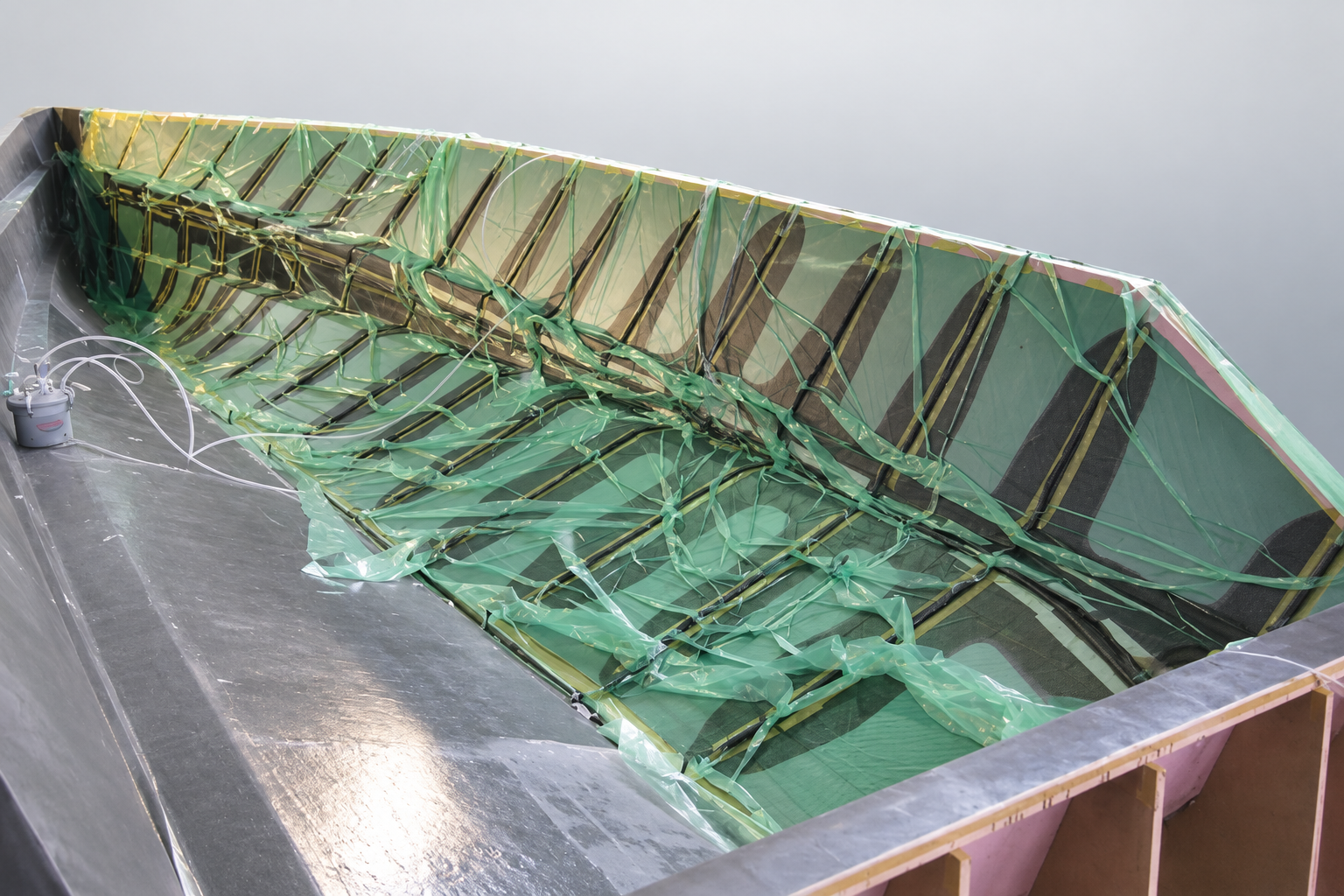
EPLAM hand-laminating systems, EPMOLD vacuum-infusion systems and epoxy casting tooling resins with fillers are kept in one clear family with their process differences visible.

Epoxy Resins
EPTEK / TOOLING EXPERTISEEpoxy Resins

Engineering view / Epoxy resins

Treat the resin as part of a thermal and process system

A composite tool is not just a resin choice. Lamination and infusion systems control wet-out, flow, heat build-up, shrinkage, cure and the dimensional result after thermal cycling. The selection starts with the tool size, fibre architecture and process window.

01 / CUSTOMER PROBLEM

Avoid flow and heat surprises

Large tools expose poor wet-out, short working time, excessive exotherm and uneven cure. Selecting the process route first helps prevent a resin that works in a small coupon from failing in a thick or long tool.

02 / SELECTION LOGIC

Set the process window

Choose EPLAM for the intended hand-lay-up behaviour and EPMOLD for the required infusion path. Confirm viscosity, pot life, flow length, fibre architecture, cure/post-cure temperature and dimensional tolerance from the matching TDS.

03 / PROCESS CHECKPOINTS

Control thickness and heat

Plan mixing, degassing, wet-out, vacuum integrity, laminate thickness, exotherm, cure and post-cure. Record the actual shop temperature and cure history so the tool can be traced.

04 / RELEASE CHECK

Design the thermal chain

The resin, reinforcement, gelcoat, backing structure and release agent must be considered together. A trial laminate on the intended surface is often more informative than a single headline Tg value.

Build the cure record with the tool.Share geometry, temperature or hardness target, process route, quantity and finish requirement. The matching EPTEK TDS remains the authority for grade-specific values and handling limits.Contact us ↗

Controlled TDS data

Compare grades by route and process window

EPLAM is the hand-lay-up mould-resin family; EPMOLD is the vacuum-infusion and high-temperature tooling family. Values are taken from the matching TDS. Pot-life, gel time and operating time are kept in the terminology used by each document.

GradeRouteTgCure scheduleWorking / gel timeTest basisMix ratioMixed viscosityTDS
EPLAM85Hand-lay-up>75 °C25 °C 8 h + 80 °C 12 hPot-life 45–65 min125 g at 25 °C
Laminate gel >70 min at 23 °C
100:24480–600 mPa·s at 25 °COpen TDS ↗
EPLAM86Hand-lay-up
F / S / L / XL hardeners
75 / 81 / 83 / 84 °C
F / S / L / XL
F 15–25 · S 25–35 · L 60–90 · XL 90–120 min125 g at 25 °C
Laminate gel 40 / 60 / 140 / 220 min at 23 °C
100:25F/S/L/XL: 600–700 / 450–600 / 600–700 / 600–700 mPa·sOpen TDS ↗
EPLAM120Hand-lay-up121 °C25 °C 8 h + 105 °C 36 hOperating time 35–50 min118 g at 25 °C100:18600–750 mPa·s at 25 °COpen TDS ↗
EPLAM145Hand-lay-up>145 °CStep cure to 140 °CGel time 75–95 min150 g at 25 °C100:24800–1,000 mPa·s at 25 °COpen TDS ↗
EPLAM160Hand-lay-up>150 °C25 °C 6 h + 60/80/120/160 °C stepsOperating time 140–160 min150 g at 25 °C100:28800–1,500 mPa·s at 25 °COpen TDS ↗
EPLAM170Hand-lay-up>170 °C60 °C 1 h + 100 °C 1 h + 170 °C 4 hOperating time about 95 min100 g at 25 °C100:25About 590 mPa·s at 25 °COpen TDS ↗
EPLAM210Hand-lay-up208 °C120 °C post-cure 36 hOperating time 200 min130 g at 25 °C100:301,600–2,300 mPa·s at 25 °COpen TDS ↗
EPMOLD140LSVacuum infusion135 °C
143 °C
105 °C / 36 h
120 °C / 36 h
Gel time 100–140 min500 g at 25 °C100:20250–300 mPa·s at 25 °COpen TDS ↗
EPMOLD170LVVacuum infusionUltimate 175 °C60 °C mid-cure, then 120 °C / 12 hGel time 200–250 min500 g in air at 25 °C100:26250–300 mPa·s at 25 °COpen TDS ↗
EPMOLD220High-temperature tooling / infusion230 °C220 °C post-cure 6 hOperating time 150–180 min500 g
TDS does not state test temperature
100:48400–500 mPa·s at 25 °COpen TDS ↗
EPMOLD220LVHigh-temperature tooling / infusion220 °C60/100/150/200 °C stepped cureOperating time 203 min500 g at 25 °C100:40290 mPa·s at 25 °COpen TDS ↗

Mix ratios are resin:hardener by weight. Time values depend on batch size, temperature and test method; the linked TDS is the authority for production use.

01 / PRODUCT FAMILY

EPLAM

Hand-laminating epoxy systems for glass-fibre and carbon-fibre skins, reinforcement and composite tooling routes. The EPLAM range includes EPLAM85, EPLAM86, EPLAM120, EPLAM145, EPLAM160, EPLAM170 and EPLAM210, with grade selection set by handling window and temperature target. Confirm current TDS coverage for any catalogue grade not listed in the product data above.

02 / PRODUCT FAMILY

EPMOLD

The EPMOLD range covers vacuum-infusion tooling routes. The EPMOLD range includes EPMOLD130M, EPMOLD135, EPMOLD140LS, EPMOLD145, EPMOLD155, EPMOLD170LV, EPMOLD200, EPMOLD220 and EPMOLD220LV. Confirm current TDS coverage for any catalogue grade not listed in the product data above.

03 / PRODUCT FAMILY

Epoxy Casting Tooling Resins and Fillers

Epoxy casting systems and fillers for near-net blanks, precision cast tooling and large forms. Resin, filler, cure, exotherm and machining must be read from the relevant TDS.

Specialist epoxy systems

SPECIALIST APPLICATION

Epoxy Syntactic Buoyancy Systems

An engineered epoxy matrix and hollow glass microspheres form deep-sea buoyancy blocks. Select the finished material against hydrostatic pressure, water uptake, creep and the required net buoyancy. Polyurea surface protection is specified separately as part of the completed buoyancy system.

SPECIALIST APPLICATION

EPBOND 2020 Epoxy Repair Adhesive

An epoxy repair adhesive for filling resin-starved areas after wind blade manufacture. Select the application method and cure conditions with the existing substrate and blade adhesive. Other composite repairs require confirmation for the actual component and service duty.