
Application / Marine and subsea

Marine Buoyancy Materials

Select the buoyancy system by operating depth, pressure and required net lift. Shallow-water foam and deep-sea epoxy buoyancy blocks have different structures and qualification requirements. Surface protection must be selected with the buoyancy material.

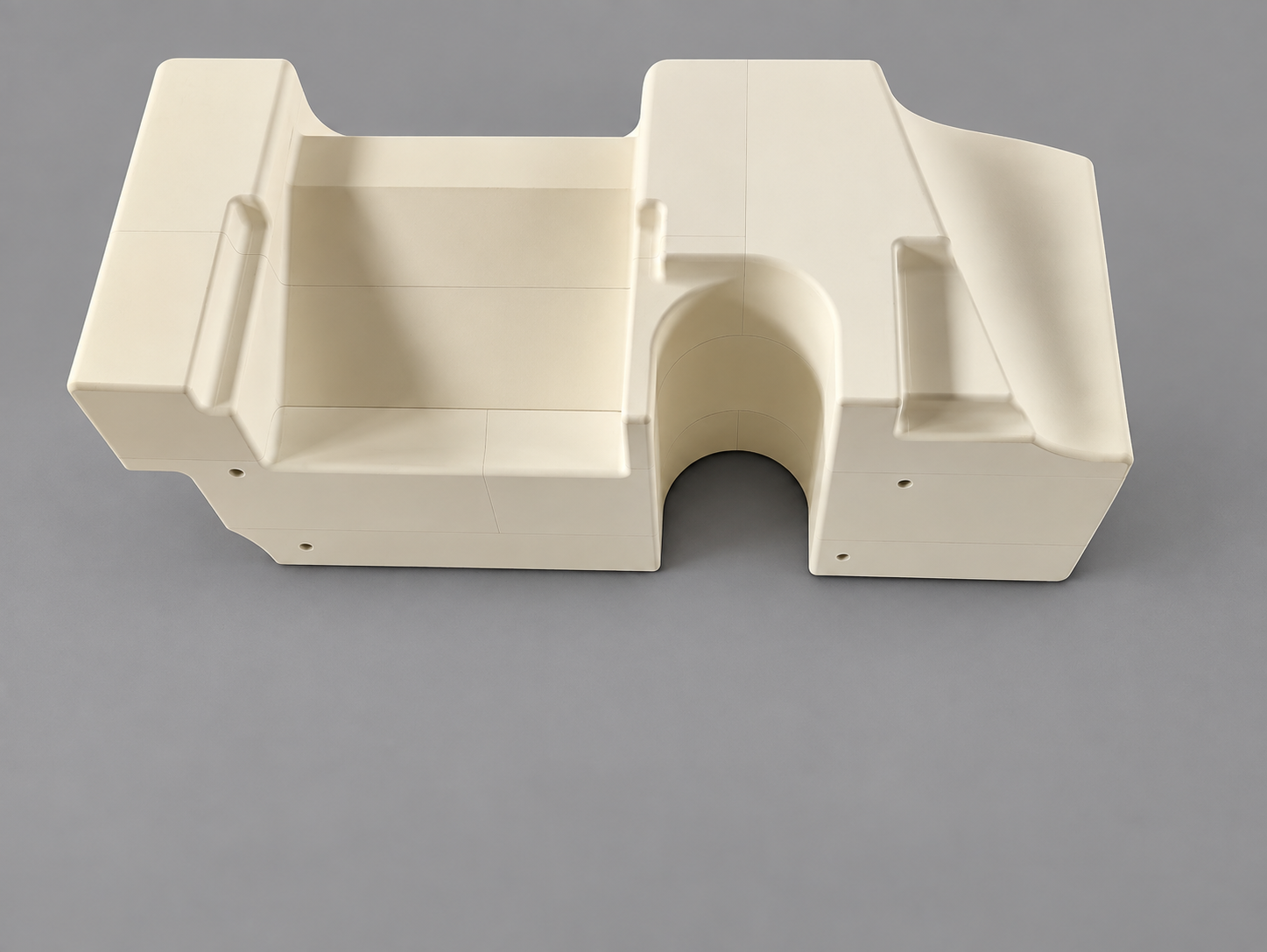
EPTEK supplied buoyancy block, isolated against a grey background
EPTEK / APPLICATIONMachined buoyancy block

Engineering requirements

Different materials for different depths

01 / SHALLOW WATER

Polyurethane foam

PUFOAM can be considered for surface and shallow-water buoyancy cores. Check water absorption, compression, joints and protection in the intended structure; a foam density alone does not establish an operating depth.

02 / DEEP SEA

Epoxy and hollow glass microspheres

For the deep-sea application, use an engineered epoxy syntactic buoyancy block: an epoxy matrix containing suitable hollow glass microspheres. Evaluate the finished block for hydrostatic pressure, water uptake, creep and retained buoyancy.

Surface protection

Polyurea protection belongs to the system

Polyurea is used as a protective coating in this material system. Specify adhesion to the buoyancy block, coverage at edges and penetrations, resistance to water exposure and repair of coating damage. It must not be substituted by a generic polyurethane casting resin.

Engineering requirements

Define performance at block level

Design inputWhy it matters
Operating and test pressureThe finished block and its interfaces need a defined pressure qualification; generic foam properties do not establish a depth rating.
Net buoyancy over timeInclude block density, absorbed water, coating, inserts and long-term compression in the buoyancy budget.
Geometry and attachmentDefine machining, insert loads, joints and coating continuity at penetrations.
Manufacturing qualityControl microsphere integrity, mixing, trapped voids, cure and surface preparation; verify the completed assembly.